
- Sierra Hull Shines Bright at Brown County Music Center with Milk Carton Kids
- Sax and Soul on the River: Jake Clemons’ Fiery Set at the Minnesota Yacht Club Festival
- Doobie Brothers Bring Classic Rock Fire to Ruoff Music Center – Concert Review and Photos
- Billy Idol Rocks Noblesville: A Night of Punk Energy at Ruoff Music Center
- Beck: The Cosmic Closer
- All American Rejects: The Emo Revival
Brian Wilson: The Heartbeat of Harmony Passes at 82
Brian Wilson, the soulful architect of The Beach Boys’ sound, died today, June 11, 2025, leaving a legacy woven into the fabric of pop music. Born June 20, 1942, in Inglewood, California, his melodies captured the sun-soaked dreams of a generation. Yet, his genius was shadowed by personal struggles, making his story as complex as the harmonies he crafted. This is a tale of a boy who heard music in his heart, even when the world grew silent.
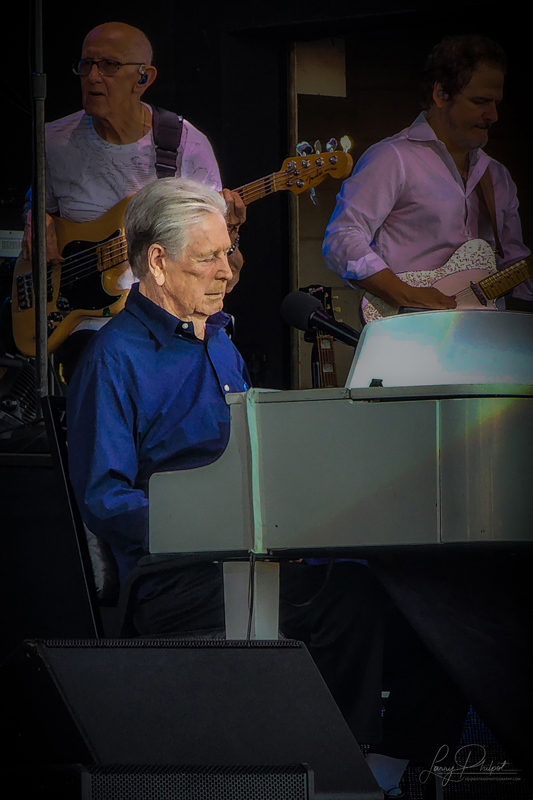
A Spark Ignited by Sound
Brian’s love for music wasn’t just a choice; it was a calling. As a child, he was captivated by his mother’s piano playing. George Gershwin’s “Rhapsody in Blue” stirred something deep within him. Meanwhile, his father, Murry, a machinist with songwriting dreams, pushed Brian toward music. By age eight, Brian was a piano prodigy, singing in church choirs. Despite partial deafness in one ear, likely from a childhood injury, he taught himself to harmonize. Consequently, music became his refuge, a way to express emotions he couldn’t voice. His obsession with The Four Freshmen’s vocal blends shaped his vision. Thus, Brian pursued music to translate the melodies in his head into something the world could hear.
A Life Shaped by Sound and Struggle
Brian Douglas Wilson grew up in Hawthorne, a Los Angeles suburb, with brothers Dennis and Carl. Their home buzzed with music, but Murry’s abusive hand cast a shadow. Still, Brian’s ear for harmony shone early. He’d spend hours dissecting records, memorizing intricate vocal parts. At 16, a reel-to-reel tape recorder became his playground, where he mastered overdubbing. As a result, his teenage years were a crucible of creativity.
In 1961, Brian, Dennis, Carl, cousin Mike Love, and friend Al Jardine formed The Pendletones. Their first demo, “Surfin’,” caught Capitol Records’ ear. Renamed The Beach Boys, they rode the surf craze. Brian’s songs, like “Surfin’ Safari,” defined a California dream. However, fame brought pressure. By 1964, Brian’s anxiety peaked during a flight, leading to a breakdown. Consequently, he quit touring to focus on studio work, a pivotal shift.
His masterpiece, Pet Sounds, arrived in 1966, a lush, introspective song cycle. Yet, the ambitious Smile project unraveled him. Overwhelmed by drugs and mental strain, Brian retreated. For years, he battled schizoaffective disorder, obesity, and addiction. Meanwhile, The Beach Boys soldiered on, but Brian’s role dwindled. In the 1970s, psychologist Eugene Landy’s controversial therapy briefly stabilized him. However, Landy’s control became oppressive, sparking family intervention by 1991.
Brian’s second wife, Melinda Ledbetter, married in 1995, became his anchor. She guided his comeback, including the 2004 completion of Smile. Despite dementia diagnosed in 2024, Brian toured until 2022. His final years were quiet, marked by Melinda’s death in January 2024 and a conservatorship. Nevertheless, his music endured, a testament to his resilience.
A Career That Redefined Pop
Brian’s career is synonymous with The Beach Boys, but his influence stretched further. He co-founded the band with Dennis, Carl, Mike Love, and Al Jardine. Later, David Marks and Bruce Johnston joined, with Johnston replacing Brian on tour. Brian’s production genius shone on albums like Surfer Girl and Pet Sounds. Beyond The Beach Boys, he produced The Honeys, a girl group featuring his first wife, Marilyn Rovell. He also co-wrote Jan & Dean’s 1963 hit “Surf City.”
His relationships with artists like Paul McCartney, who called him a “genius,” made headlines. Collaborations included Van Dyke Parks on Smile and Tony Asher on Pet Sounds. Brian appeared in films like The T.A.M.I. Show (1964) and the biopic Love & Mercy (2014), portrayed by Paul Dano and John Cusack. A 2021 documentary, Long Promised Road, captured his reflective side.
Awards piled up: a 1988 Rock and Roll Hall of Fame induction, a 2000 Songwriters Hall of Fame honor, and a 2007 Kennedy Center Honor. Additionally, he won a Grammy for Brian Wilson Presents Smile in 2004. His songs reshaped pop, blending rock with orchestral flourishes.
Biggest Hits:
- “Surfin’ USA” – Written by Brian Wilson, based on Chuck Berry’s “Sweet Little Sixteen,” a 1963 surf anthem.
- “I Get Around” – Co-written by Brian Wilson and Mike Love, a 1964 chart-topper full of youthful swagger.
- “God Only Knows” – Written by Brian Wilson and Tony Asher, a 1966 Pet Sounds gem of love’s vulnerability.
- “Good Vibrations” – Crafted by Brian Wilson and Mike Love, a 1966 psychedelic masterpiece with groundbreaking production.
Controversy and Redemption
Brian’s life wasn’t without turmoil. His relationship with Eugene Landy sparked outrage. Initially hired in 1976, Landy’s “24-hour therapy” controlled Brian’s life, even co-writing songs on his 1988 solo album. By 1991, Brian’s family sued, securing a restraining order. Furthermore, his rift with Mike Love grew contentious. Love criticized Smile as “madness,” and in 2012, excluded Brian from Beach Boys tours, fueling fan backlash.
His mental health struggles were public. Drug use and a 1964 breakdown led to reclusion. Yet, Brian’s candor about his schizoaffective disorder inspired many. In 2024, his dementia diagnosis and conservatorship raised concerns, but his legacy remained untarnished.
A Night to Remember: The Royal Festival Hall, 2004
In February 2004, London’s Royal Festival Hall witnessed a miracle. Brian, then 61, performed Smile in its entirety for the first time. The audience, a mix of lifelong fans and young musicians, sat spellbound. Brian, once too fragile to perform, stood tall with a band of devoted players, including Wondermints. As “Heroes and Villains” unfolded, the room felt electric. Then, “Surf’s Up” brought tears, its piano demo hauntingly pure. For Brian, it was redemption. He’d revived a dream abandoned 37 years earlier. Fans wept, knowing they’d witnessed history. The performance, later released as an album, proved Brian’s genius was timeless.
A Legacy of Light and Shadow
Brian Wilson’s music was a paradox: joyful yet melancholic, simple yet profound. His harmonies transformed pop into art. Though he faced demons, his songs offered solace. From “In My Room” to “Smile,” he gave voice to longing. Today, fans mourn, but his melodies linger. Thus, Brian’s story reminds us: even in darkness, music can shine.


Related Posts





Latest Backstories
-
 Remembering Bob Weir: Grateful Dead Co-Founder and Rhythm Guitar Icon Passes at 78
Bob Weir, the charismatic rhythm guitarist, singer, and songwriter...
- January 11, 2026
-
 Big Yellow Taxi: Joni Mitchell’s Anthem of Loss and Realization
Joni Mitchell’s “Big Yellow Taxi,” released in 1970, is...
- August 2, 2025
-
 Backstory: The True Inspiration Behind James Taylor’s “You Can Close Your Eyes”
For such a short, simple song, this analysis is...
- July 14, 2025
-
 Unveiling the Story Behind Joni Mitchell’s “Blonde in the Bleachers”
Joni Mitchell, born November 7, 1943, remains a towering...
- July 14, 2025
-
 The True Story Behind Elton John’s “Someone Saved My Life Tonight”
Elton John, born March 25, 1947, crafted countless hits...
- July 14, 2025
-
 Joni Mitchell’s Romantic Muses: A Timeline of Love and Songs
Joni Mitchell, born November 7, 1943, crafted a legacy...
- July 13, 2025
0 comments