
- Sierra Hull Shines Bright at Brown County Music Center with Milk Carton Kids
- Sax and Soul on the River: Jake Clemons’ Fiery Set at the Minnesota Yacht Club Festival
- Doobie Brothers Bring Classic Rock Fire to Ruoff Music Center – Concert Review and Photos
- Billy Idol Rocks Noblesville: A Night of Punk Energy at Ruoff Music Center
- Beck: The Cosmic Closer
- All American Rejects: The Emo Revival
Backstory: Exploring the Heart of “Fountain of Sorrow”: Jackson Browne’s Musical Tribute to Joni Mitchell
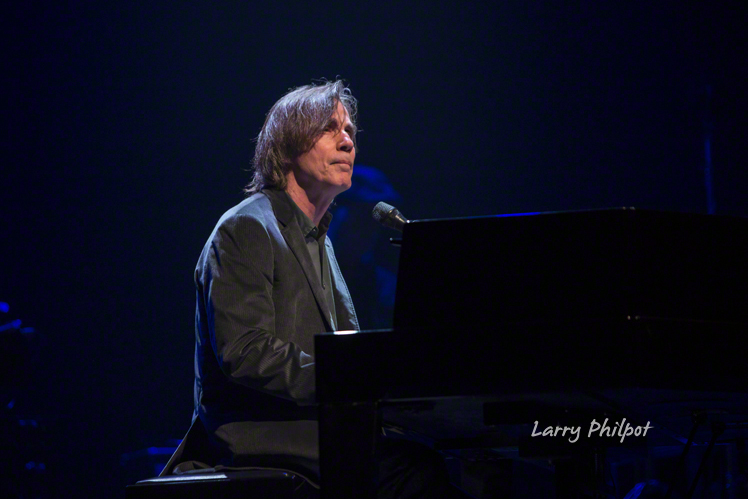
Jackson Browne, born October 9, 1948, has long been a voice of introspection in the world of music. His 1974 album Late for the Sky remains a cornerstone of the singer-songwriter movement. Among its tracks, “Fountain of Sorrow” stands out as a deeply personal piece. Fans often wonder about the inspiration behind this haunting ballad. Rumors suggest it connects to Joni Mitchell, born November 7, 1943, a fellow icon of the era.
Let’s dive into the story behind this song. The narrative unfolds through Browne’s lyrics, offering clues about a past relationship. Many believe this reflects his brief romance with Mitchell during the early 1970s. Their time together, though short, left a mark on both artists. This article explores the personal experiences and events that may have shaped “Fountain of Sorrow.”
The Early 1970s: A Meeting of Musical Minds
Browne and Mitchell crossed paths in the vibrant Laurel Canyon scene. This community fostered creativity among musicians. Their relationship began around 1971, a period when Browne was rising as a solo artist. Mitchell, already established, brought her own depth to their connection. Sources indicate their romance was intense yet fleeting.
According to Wikipedia, the song is “generally assumed” to be inspired by Mitchell. This assumption stems from their shared history. Browne’s career gained momentum with albums like For Everyman. Meanwhile, Mitchell’s work, including Blue, showcased her emotional range. Their bond likely influenced their art profoundly.
Their relationship ended amid creative and personal differences. This breakup provided fertile ground for Browne’s songwriting. “Fountain of Sorrow,” released in 1974, captures the aftermath. The song’s reflective tone hints at a love lost to time and misunderstanding.
Unpacking the Lyrics: A Window into the Past
The song opens with a vivid image: “Looking through some photographs I found inside a drawer / I was taken by a photograph of you.” This line suggests a moment of nostalgia. Browne revisits a memory, possibly triggered by a picture of Mitchell. The act of sifting through photos evokes a sense of longing.
Further, he sings, “There was just a trace of sorrow in your eyes.” This lyric paints a picture of a captured emotion. It implies Mitchell’s expression revealed more than she intended. Browne, as the observer, interprets this sorrow as a sign of their fractured bond. The photograph becomes a symbol of their shared past.

Another key verse states, “When you see through love’s illusions, there lies the danger / And your perfect lover just looks like a perfect fool.” Here, Browne reflects on the disillusionment that follows romance. This could point to his realization about Mitchell. Their ideal love faded, leaving behind a harsh truth. The “perfect fool” might hint at his own vulnerability during their time together.
The chorus offers a poignant refrain: “Fountain of sorrow, fountain of light / You’ve known that hollow sound of your own steps in flight.” This imagery blends pain with hope. The “fountain” suggests an endless flow of emotion, possibly drawn from their breakup. The “hollow sound” reflects Browne’s solitude after their split. Yet, the “light” hints at acceptance, a theme that resonates with their eventual paths.
Later, he adds, “I’m just one or two years and a couple of changes behind you / In my lessons at love’s pain and heartache school.” This line suggests Browne felt less experienced than Mitchell. She had navigated love’s complexities before. His “lessons” indicate a learning process, shaped by their relationship’s end.
The Context of “Late for the Sky”
“Fountain of Sorrow” appears on Late for the Sky, an album steeped in themes of loss. Recorded in 1974, it followed Browne’s rise to fame. The album reflects a post-Vietnam, post-Nixon era. Critics note its universal appeal, resonating with a generation facing change.
According to Under the Radar, the song is an “alleged ode” to Mitchell. This reinforces the link between their personal history and Browne’s work. The album’s minimalist production, led by David Lindley, amplifies its emotional weight. “Fountain of Sorrow” clocks in at nearly seven minutes, the longest track on the record.
The song’s release as a single failed to chart, despite its length being trimmed. Its introspective nature may have limited its commercial reach. Yet, it remains a fan favorite, praised for its lyrical depth. The connection to Mitchell adds a layer of intrigue, fueling ongoing discussions.
Joni Mitchell’s Perspective and Retaliation
Mitchell’s response to Browne’s song offers another angle. She never confirmed being the subject of “Fountain of Sorrow.” However, her later work suggests a reaction. In 1994, she released “Not to Blame” on Turbulent Indigo. Many interpret this as a rebuttal to Browne.
The lyrics of “Not to Blame” address abuse, with lines like “He was a friend of mine / He beat me black and blue.” This has led to speculation about Browne. Mitchell’s camp has hinted at a falling out after the 1970s. Some believe “Fountain of Sorrow” prompted her sharp response. The tension between them adds complexity to the song’s narrative.
In a 2014 interview with The Times, Browne addressed the rumors. He described the song as generous, saying, “It turned out to be a more generous song than she deserved.” His comment, met with audience laughter, nods to Mitchell. This suggests a lingering bitterness, though he avoided direct confirmation.
Mitchell’s own songs, like “Car on a Hill” from 1974’s Court and Spark, may reflect their time together. The track’s theme of waiting hints at her perspective. Together, their music forms a dialogue, with “Fountain of Sorrow” as a starting point.
The Emotional Landscape of the Song
“Fountain of Sorrow” blends melancholy with resilience. Browne’s voice carries a weight earned through experience. The song’s structure, with its extended runtime, allows for a slow unraveling of emotion. Each verse builds on the last, mirroring the process of memory.
The line “What I was seeing wasn’t what was happening at all” reveals a shift in perception. Browne acknowledges his misjudgments during the relationship. This could tie to Mitchell’s influence, as she challenged his worldview. Her artistic boldness likely shaped his growth.
Additionally, “You’ve had to struggle, you’ve had to fight / To keep understanding and compassion in sight” speaks to endurance. This might reflect Mitchell’s strength, which Browne admired. Their breakup, though painful, fostered mutual respect over time. The song captures this duality.
In listening to the song, it seems to echo the physical effects of the breakup, with the “heartbeat” of the song slowing, around the 5 minute mark, to nearly being over, as the music slows and stops, then slowly begins and becomes alive again. With backup vocals by the late Dan Fogelberg, Don Henley, J.D. Souther, and David Lindley on electric guitar, it’s a masterpiece.
Cultural Impact and Legacy
Over decades, “Fountain of Sorrow” has endured as a classic. Its inclusion in Browne’s 2005 live album Solo Acoustic, Vol. 1 shows its lasting appeal. Fans continue to dissect its meaning, often linking it to Mitchell. This keeps the song relevant in music discussions.
The track’s addition to the National Recording Registry in 2021, as noted by Under the Radar, underscores its significance. It joins other cultural treasures, recognized for its human portrayal. The Mitchell connection enhances its narrative, drawing new listeners.
Critics like Robert Christgau have called it the album’s best track. They praise its metaphor of a “fountain” as a source of both sorrow and light. This duality mirrors Browne’s journey, shaped by his time with Mitchell. The song remains a touchstone for exploring love’s complexities.
Personal Reflections and Speculation
Jackson has remained vague about the song’s inspiration. His 2014 live introduction, cited by Songfacts, hints at an ex-lover. He mentioned writing it after encountering her beauty post-breakup. His remark about generosity suggests Mitchell’s later actions, possibly “Not to Blame,” influenced his view.
Speculation persists due to their shared history. Mitchell’s silence on the matter adds mystery. Yet, her own lyrical responses imply a story worth telling. Browne’s reluctance to confirm may protect their privacy, leaving fans to interpret.
Their 1970s romance occurred during a transformative period. Both artists were defining their legacies. “Fountain of Sorrow” stands as a testament to that era, blending personal pain with universal themes. Its lyrics invite listeners into Browne’s emotional world.
Conclusion: A Song Beyond Its Origins
“Fountain of Sorrow” transcends its rumored roots. Whether about Mitchell or not, it captures the essence of lost love. Browne’s lyrics offer a window into his soul, shaped by a pivotal relationship. The song’s enduring power lies in its honesty.
From the photographs to the fountain imagery, each line weaves a story. Mitchell’s influence, if present, adds richness. Their brief connection fueled a work that resonates today. As Browne continues to perform it, the song evolves, reflecting his growth.
Fans will keep debating its inspiration. The lack of confirmation keeps the mystery alive. Still, the lyrics speak for themselves, offering insight into a moment frozen in time. “Fountain of Sorrow” remains a cornerstone of Browne’s catalog, inviting endless exploration.


Related Posts





Latest Backstories
-
 Remembering Bob Weir: Grateful Dead Co-Founder and Rhythm Guitar Icon Passes at 78
Bob Weir, the charismatic rhythm guitarist, singer, and songwriter...
- January 11, 2026
-
 Big Yellow Taxi: Joni Mitchell’s Anthem of Loss and Realization
Joni Mitchell’s “Big Yellow Taxi,” released in 1970, is...
- August 2, 2025
-
 Backstory: The True Inspiration Behind James Taylor’s “You Can Close Your Eyes”
For such a short, simple song, this analysis is...
- July 14, 2025
-
 Unveiling the Story Behind Joni Mitchell’s “Blonde in the Bleachers”
Joni Mitchell, born November 7, 1943, remains a towering...
- July 14, 2025
-
 The True Story Behind Elton John’s “Someone Saved My Life Tonight”
Elton John, born March 25, 1947, crafted countless hits...
- July 14, 2025
-
 Joni Mitchell’s Romantic Muses: A Timeline of Love and Songs
Joni Mitchell, born November 7, 1943, crafted a legacy...
- July 13, 2025
0 comments